Three points for nasal comfort.
A simple self-acupressure routine using Yingxiang (LI20), Yintang (EX-HN3) and Hegu (LI4).
Nasal symptoms can have different causes.
Congestion, sneezing and nasal discomfort may occur with allergic rhinitis, respiratory infections, irritants and other conditions. This Golden Tip is a simple complementary self-care routine, not a diagnosis.
Use comfortable pressure. It should feel firm but tolerable, never sharply painful.
Find it. Press it. Breathe.
Massage both sides where applicable. These instructions use finger pressure only — never needles.
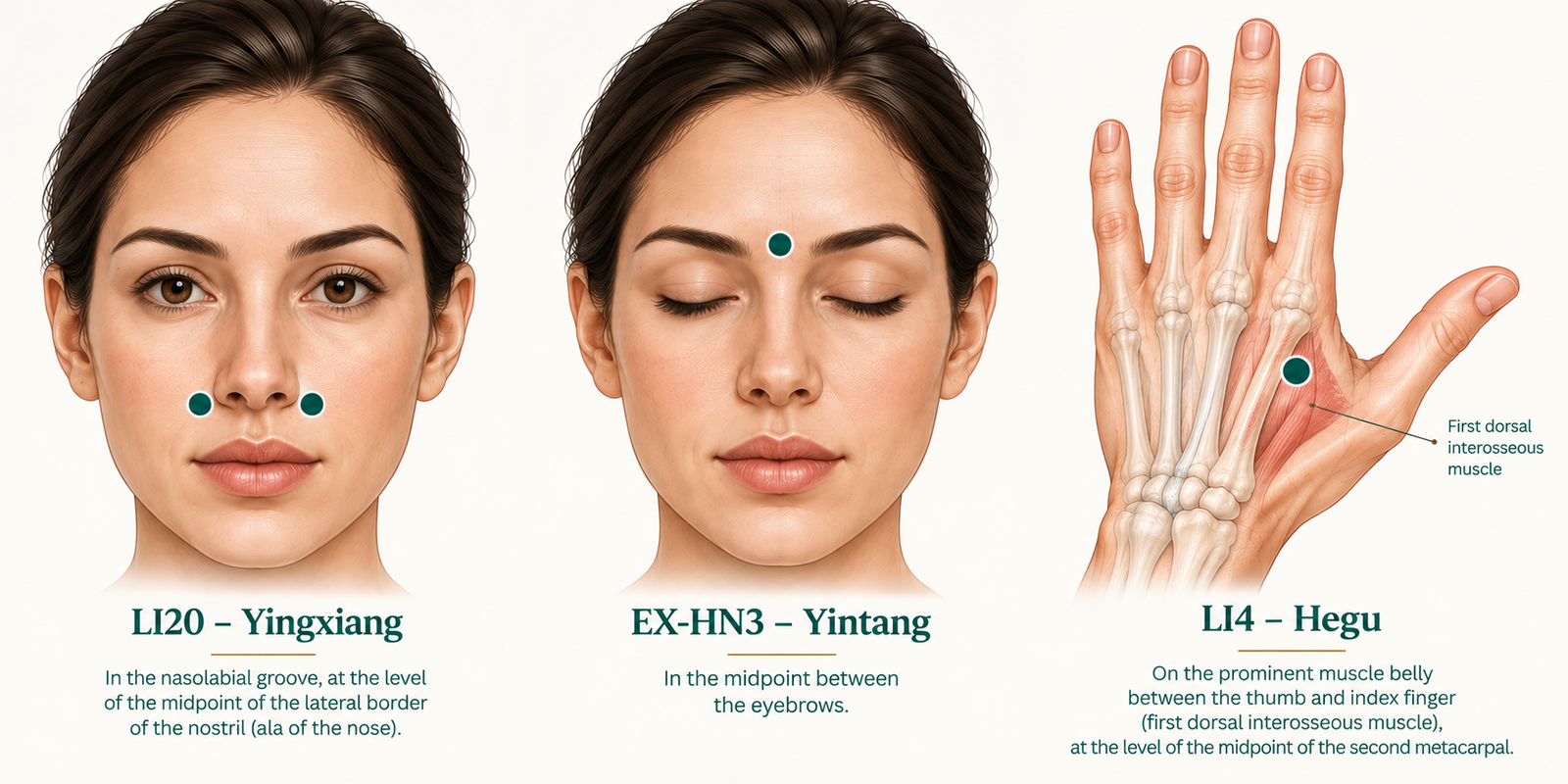
Beside the nose
Where
In the nasolabial groove beside each nostril, approximately level with the midpoint of the lateral border of the nasal ala.
How
Place one fingertip on each side and massage gently in small circles for 30–60 seconds.
Traditional use
A local facial point traditionally used for nasal obstruction, discharge and disorders involving the nose.
Between the eyebrows
Where
At the midpoint between the medial ends of the eyebrows.
How
Apply gentle steady pressure or small circular massage for 30–60 seconds while breathing slowly.
Traditional use
Commonly used for nasal symptoms and as a calming local point for discomfort involving the forehead and nose.
Between thumb and index finger
Where
On the back of the hand, in the prominent muscular area between the thumb and index finger.
How
Massage with the opposite thumb using slow circular pressure for 30–60 seconds, then change hands.
Traditional use
A major distal point traditionally associated with disorders of the face, nose and head.
About three minutes.
Stop if stimulation causes pain, dizziness, skin irritation or feels distinctly uncomfortable.
Symptom support, not a cure for allergy.
Acupuncture and acupressure have been studied for allergic rhinitis and related nasal symptoms. Evidence varies by technique and study design, so Tao Point presents this routine as complementary self-care that may help some people with symptom comfort, not as a replacement for medical evaluation or established allergy treatment.
Know when nasal symptoms need medical attention.
Do not rely on acupressure for warning signs.
Seek medical care for significant difficulty breathing, swelling of the lips, tongue or throat, severe facial swelling or pain, persistent high fever, or symptoms that are severe, worsening or unusually prolonged.
During pregnancy, use a conservative approach and seek professional guidance before stimulating LI4.
Back to the self-care library
Choose another common problem and learn a small set of easy-to-locate points.